
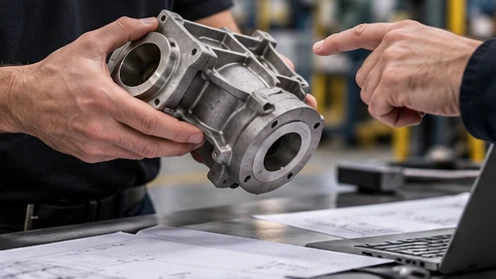
A production team may need outside support when a quality hold, finishing backlog, storage constraint, or demand increase exceeds the capacity available for a particular operation. The decision starts with the work that needs doing and the limits your team is working within.
A useful partner discussion turns that need into an agreed scope, location, schedule, and acceptance process.
Start with the constraint
Identify what is preventing the next operation from proceeding. Is a batch waiting for inspection? Are castings arriving faster than they can be finished? Does the plant need inventory staged for scheduled releases? Is a defined operation short of labor?
Describe the quantity and timing as well as the problem. A held shipment and a recurring weekly program may involve the same process but need different staffing, transport, and reporting arrangements.
Compare the complete route
Look beyond the price of an individual operation. Include freight, packaging, transfers between providers, incoming checks, storage, and the coordination needed to get parts back into production. Ask which operations can be handled together and which would require another location or provider.
Combining work can reduce handling, but only when the provider has the capacity and capability for the complete scope. Confirm those details before relying on a proposed route.
Ask for evidence that fits your work
- Capability: Can the provider handle the part, material, process, and acceptance criteria?
- Capacity: What quantity and schedule can be agreed for this job?
- Location: Where will each operation take place, and who coordinates transport?
- Quality: Which certificate and scope apply, if certification is required?
- Reporting: What records will you receive, and who resolves exceptions?
- Supervision: Who directs the work and manages site requirements?
A general equipment list or a company-wide credential is not a substitute for answers about the actual work location and process. For repeat programs, ask how changes in volume, drawings, or acceptance criteria are handled.
Agree a manageable starting point
Where appropriate, use an initial batch to establish handling, work instructions, acceptance, and communication. Define what you need to learn from that batch and who decides whether the program proceeds. A trial should have a clear scope rather than an open-ended instruction to make parts acceptable.
Before work begins, document the release process, contact people, and escalation path. If a part cannot be processed as planned, the provider needs to know whether to hold it, ask for authorization, or return it.
Discuss the options with WGS
WGS supports foundries and industrial manufacturers with inspection and sorting, casting finishing, blasting, warehousing and just-in-time delivery, and labor support. Review the locations and certification details, then describe the operation, quantity, location, and timing in a quote request.