
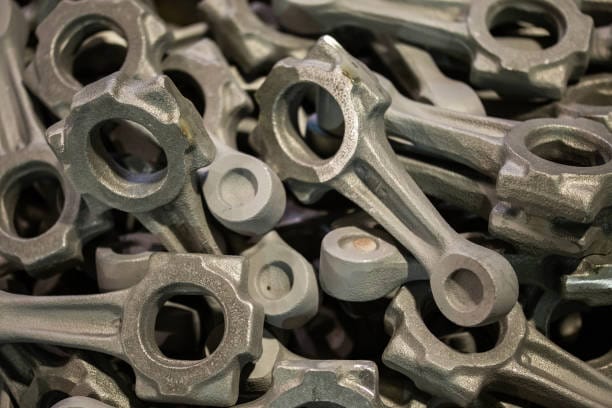
Blasting removes material such as sand and scale from metal surfaces and can prepare a surface for a later operation. A useful specification describes what must be removed, the condition required afterward, and any features that must be protected.
The part's geometry, material, size, and handling requirements help determine whether it fits a proposed blasting process.
What tumble blasting means
In a tumble-blast machine, parts turn over while exposed to an abrasive blast stream. The tumbling motion presents different surfaces to the abrasive. Parts must be suitable for contact with one another and with the machine during processing.
Tumble blasting is not the same as vibratory mass finishing. Vibratory finishing moves parts together with finishing media in a processing container; it uses a different mechanism. A quote should identify the actual process rather than treating the two names as interchangeable.
For reference, Wheelabrator describes tumblast equipment, and Rösler explains mass finishing. These explain the processes generally; they do not identify the equipment installed at WGS.
Check whether the part can tumble
Thin sections, delicate edges, cosmetic surfaces, or features that can become entangled may affect the handling method. Describe those features when requesting a quote. Include approximate dimensions and weight, along with photographs or drawings that show areas difficult to reach.
If a part cannot tumble, ask which handling options are available for that geometry. Do not assume that a machine suitable for one part family can process another without a review.
Specify the required surface condition
“Blast clean” may not be enough for a downstream coating or inspection requirement. Provide the applicable cleanliness or surface-profile specification, an agreed visual standard, or a boundary sample. Explain whether the incoming material is sand, scale, rust, or another residue.
Identify dimensions and surfaces that must be protected. Also explain what happens after blasting: inspection, coating, storage, or assembly. The receiving operation may have its own requirements for handling, packaging, and the time between processing steps.
Keep cleaning and performance claims separate
A cleaned appearance does not demonstrate a specified fatigue-life improvement or corrosion-protection result. If a part requires a controlled strengthening treatment or a protective coating, identify that requirement separately and confirm the process needed to meet it.
Similarly, agree how the result will be checked. A visual comparison, a specified surface measurement, and a downstream coating check answer different questions.
Prepare a quote request
- Part material, size, weight, and geometry.
- Incoming surface condition and required result.
- Critical features and whether parts can tumble.
- Quantity per batch, repeat frequency, and target date.
- Packaging and the next operation.
WGS provides shot and tumble blasting as part of its manufacturing support services. Send a description of your requirements so the team can assess the work and discuss the appropriate process.