
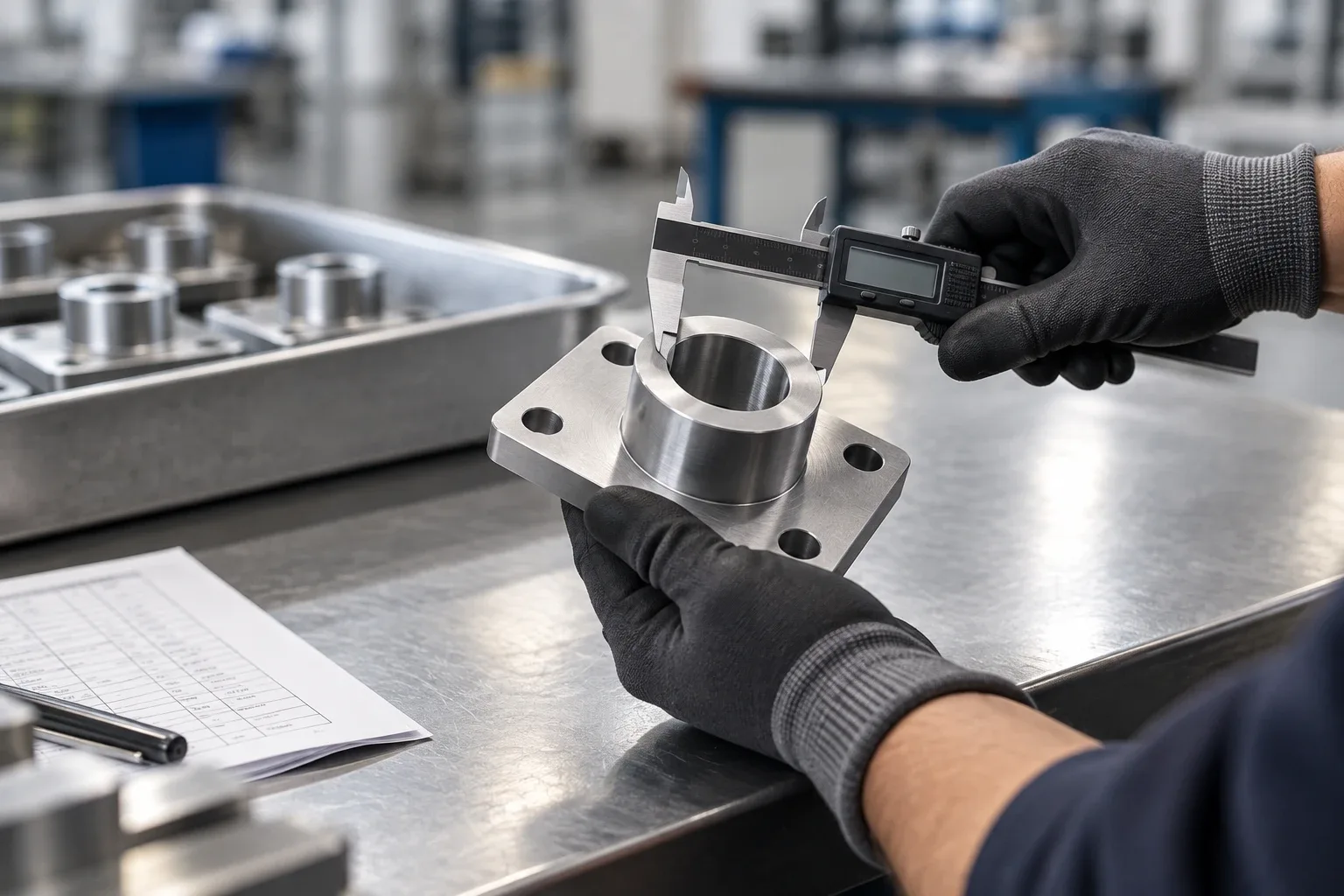
A suspect batch creates two immediate questions: which parts can be used, and how will that decision be recorded? An inspection and sorting request should give the people checking the parts a clear standard and give your production team a clear release process.
The checklist below is a starting point for a conversation with your quality team and an inspection provider. The inspection method, staffing, and timing depend on the part and the agreed scope.
Describe the issue and identify the stock
Start with the part number and revision, the suspected defect, the quantity, and the stock's current location. Explain how the issue was found and whether more material is still arriving. A one-time held batch needs a different plan from an ongoing stream of incoming parts.
- Which lots, containers, or shipments may be affected?
- Is the stock at your plant, a supplier, a warehouse, or a customer's facility?
- When does production need an initial release, and how many parts does it need?
- Who can authorize holding, moving, reworking, or scrapping material?
Agree what passes before the first check
Provide the relevant drawing revision, written acceptance criteria, or approved boundary samples. A description such as “minor surface damage” leaves room for different decisions between operators and shifts. Identify the location and extent of an acceptable condition, along with any measurement needed to decide.
Your quality representative should resolve unclear cases. Agree how an inspector raises a question and whether the affected parts remain on hold while it is answered. Record changes to the criteria so later results can be understood in context.
Choose the inspection method with the provider
Explain the characteristic to be checked before specifying equipment. Some decisions involve visual comparison; others require an agreed measurement. Confirm the method, equipment, operator requirements, and reporting that are available for your particular job.
Also agree whether the work calls for checking every part or following an approved sampling plan. A sample result should not be described as an inspection of the entire lot. The appropriate approach belongs in the agreed work instructions.
Plan identification and reporting
Keep accepted, rejected, and unresolved stock identifiable throughout the work. Agree labels, container identification, and the information needed to trace a result back to its lot. Include a way to reconcile the incoming quantity with the quantities released, held, or otherwise dispositioned.
Useful reporting identifies what was inspected, the criteria used, counts by result, and issues requiring a decision. Agree the reporting frequency and recipient before work starts. A shift update and a final report serve different purposes.
Include the return to production
Specify packaging, destination, and release timing. If rework or finishing may follow inspection, agree its scope and acceptance requirements separately. Sorting identifies the condition of the stock; it does not by itself correct the process that created the defect.
WGS provides inspection and sorting support at WGS facilities or customer locations, subject to the agreed work. Describe your part, quantity, location, and timing to begin. If drawings are confidential, mention that they are available and arrange how to share them after contact.