
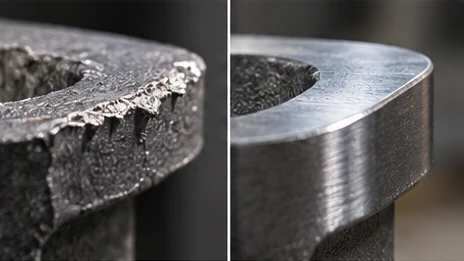
A burr, an unfinished parting line, or excess material on a critical surface can create work for the next operation. The cost depends on where the issue is found and what must happen before the part can be used.
Finishing decisions are easier to manage when the required result is agreed before processing and checked before the parts move on.
Trace the effect through the route
Start with the observed condition rather than assuming every surface mark is a defect. Compare it with the drawing, specification, or approved sample. If it is outside the requirements, identify the affected operation: fit, handling, coating preparation, or another use.
Record the actual consequences. They may include inspection time, additional finishing, repackaging, transport, held inventory, or delayed assembly. Use your own job records to estimate the cost; a generic industry total will not describe your part or schedule.
Agree the corrective work
Mark the areas to be worked and the areas to protect. Define the acceptable finished condition and who approves it. Where material removal may affect a critical dimension, agree the relevant checks before rework starts.
Some parts may not be recoverable within the required limits. Keep disposition authority clear and identify uncertain parts so they are not mixed with accepted stock.
Prevent the same ambiguity on the next batch
- Use the current drawing revision and approved work instructions.
- Provide boundary samples where visual judgments are required.
- Record recurring issues in the incoming condition.
- Agree how operators escalate unclear cases.
- Protect finished surfaces in packaging and handling.
Outside finishing support can be useful when a defined operation exceeds available capacity or requires a different process. WGS has supported manufacturers since 2008 and offers casting finishing, grinding, sanding, and deburring. Describe the part and the required work to discuss a suitable scope.